Walkability vs. Walking: Testing the role of proximity in urban environments
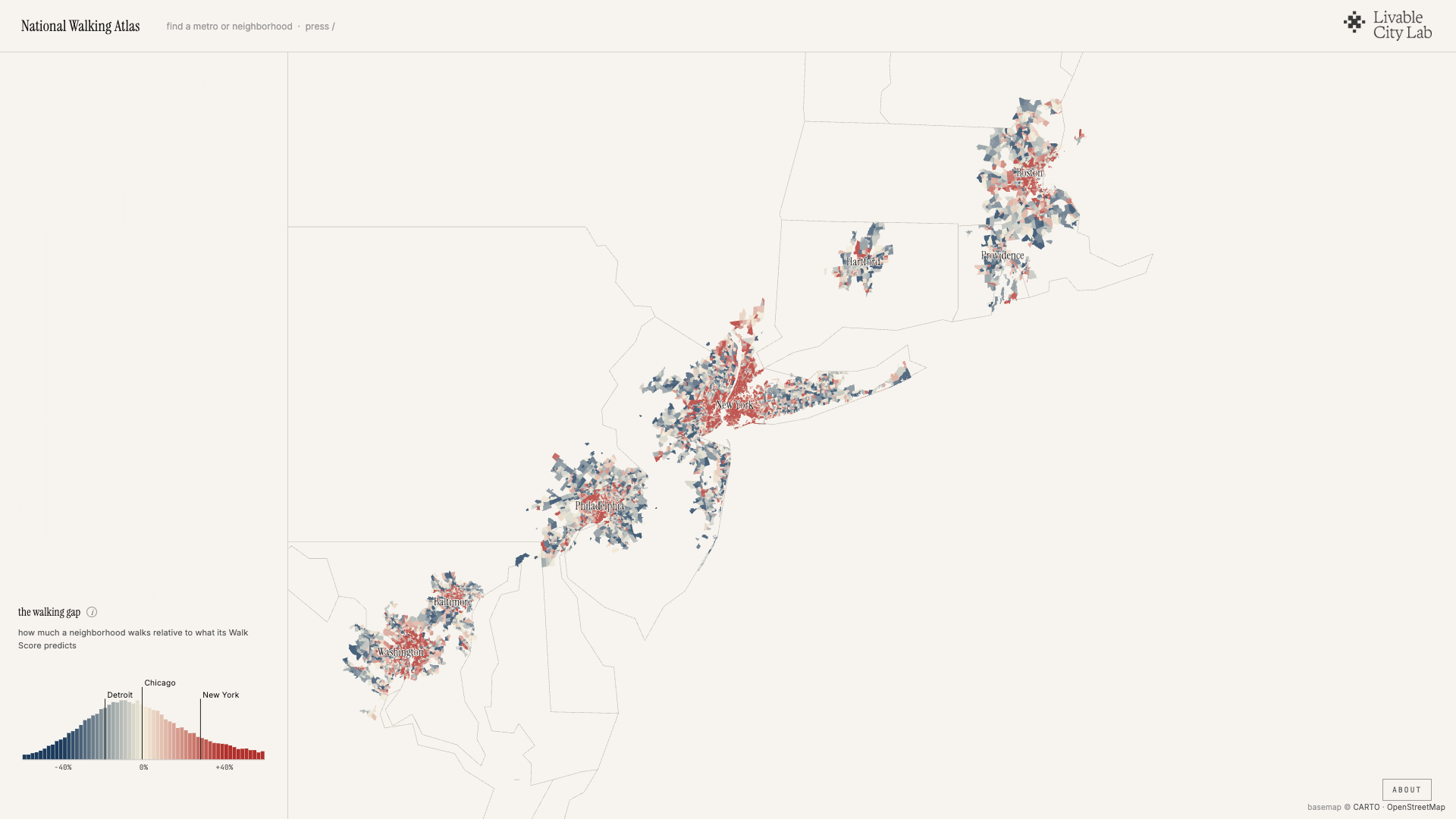
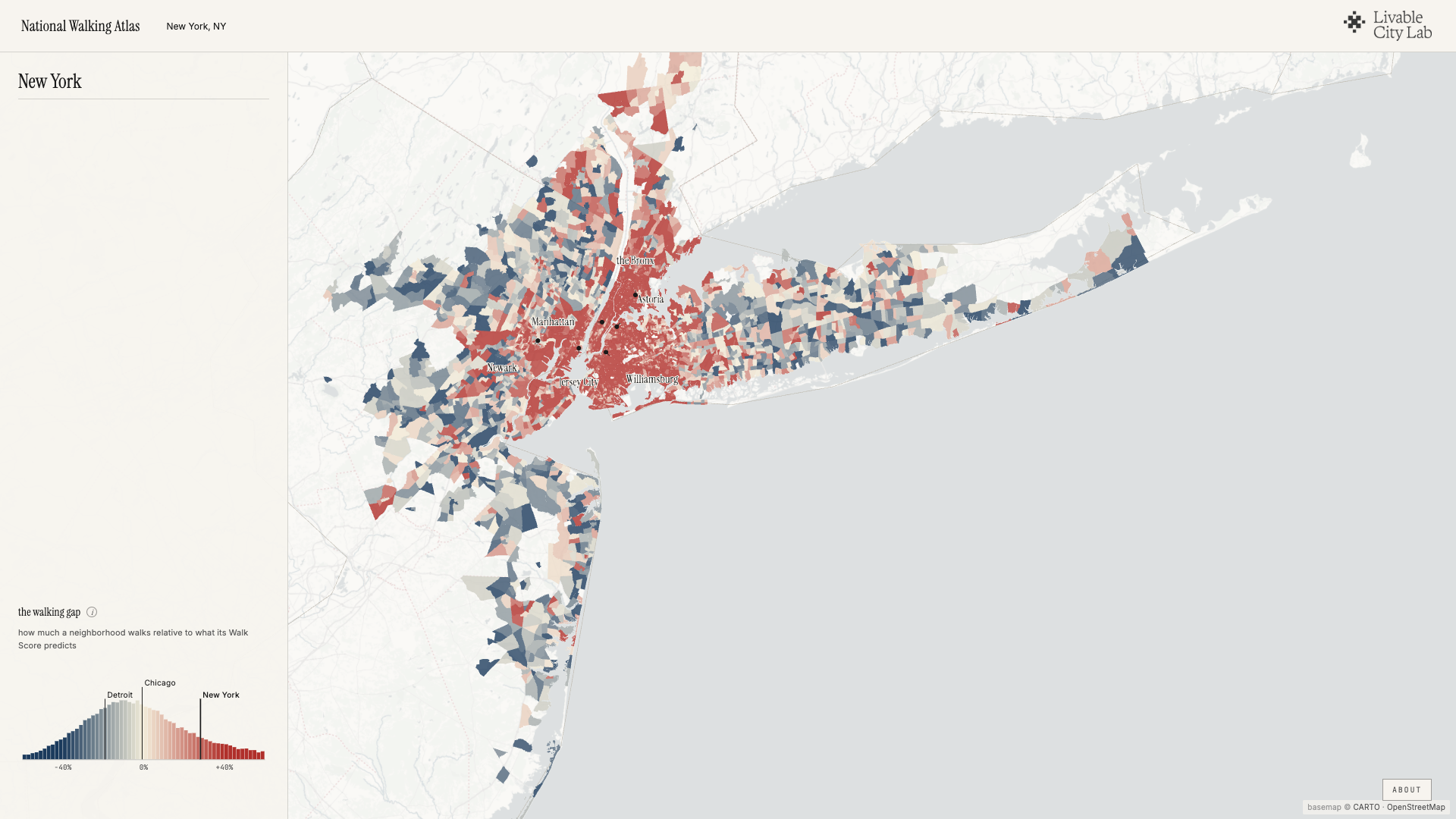
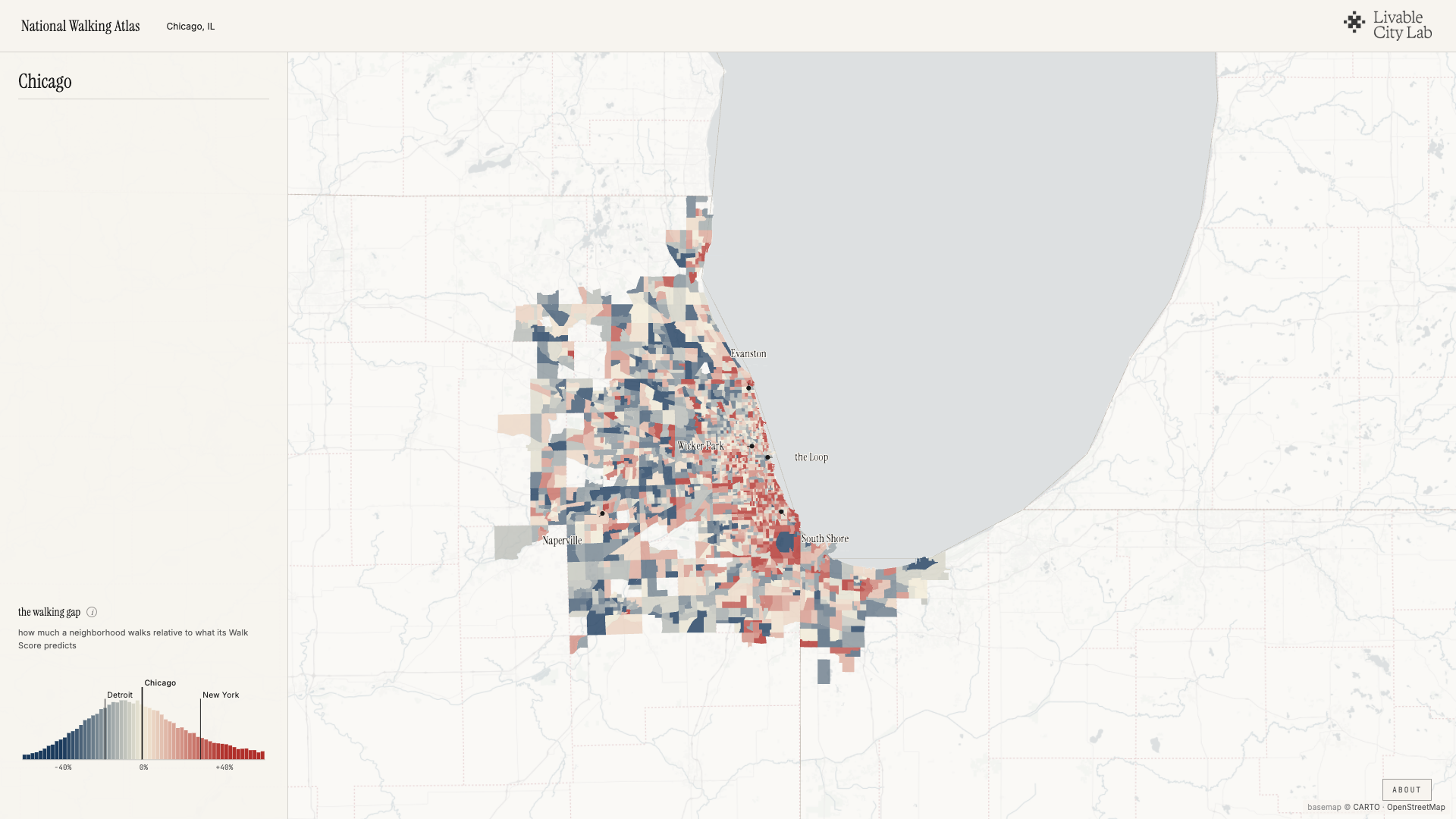
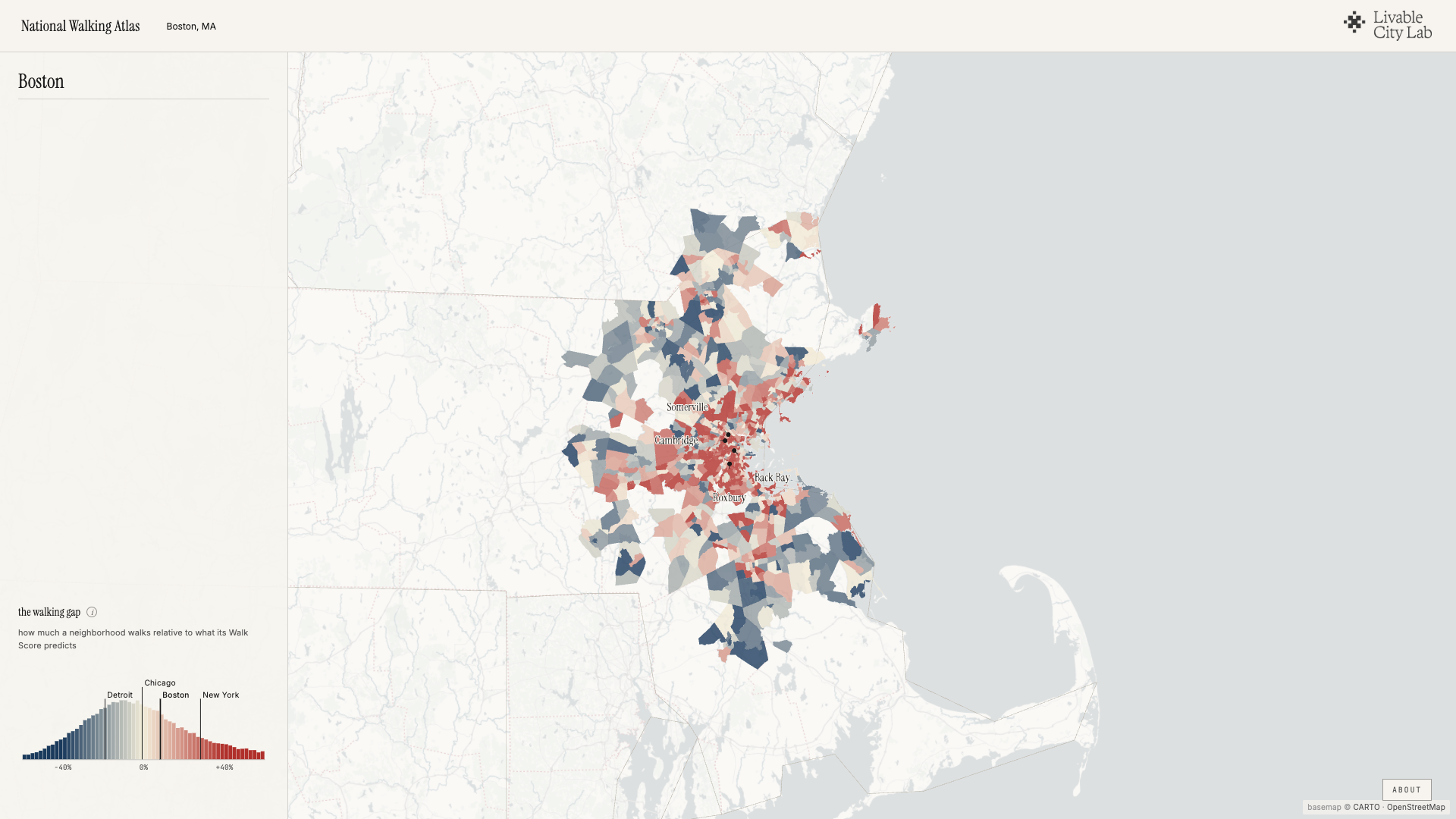
Using GPS-based mobility data for approximately 18 million devices across 272 U.S. urban areas, this paper tests how well amenity access predicts observed walking and under what conditions proximity translates into walking. We find that amenity access predicts walking only selectively. It explains just 25% of neighborhood-level variation in walking, and 89% of the gap between walkability and observed walking lies within cities rather than between them. Two findings help explain why. First, amenity access predicts destination-oriented walking well (R2 = 0.51) but is unrelated to recreational walking (R2 = 0.03), which accounts for 69% of all walking trips. Second, even for destination-oriented walking, other features of the built environment—traffic conditions, street connectivity, and pedestrian-oriented design—shape whether access translates into walking. Well-connected, low-traffic neighborhoods generate substantially more walking than auto-oriented ones at the same level of amenity access. These findings suggest that proximity to amenities is necessary but not sufficient for generating walking.